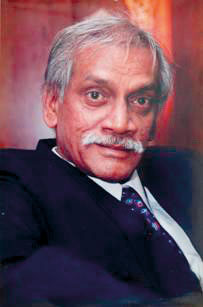
We remember past President, R. Pala Krishnan, on the 10th anniversary of his passing.
In Memory of Eagle Eye1
R. Pala Krishnan, SC, 1942–2003
“Lawyers, I suppose, were children once.”
– Charles Lamb, cited in Harper Lee’s To Kill a Mockingbird
Mr Pala, SC, the “tireless visionary”, did not have much time to reflect on his colourful life.2 This month,10 years to the day of his death, one of his many subjects makes an attempt.
I think Mr Pala’s approach to the law and life has been fairly well-documented, as has been his passion for football and music.3 But not quite as much has been said about the everyday life of the “workaholic” who reportedly “knew not how to sleep”.4
When his time came – 10 years ago, some of us were surrounded by words of sorrow, thanking us for sharing his time with so many. I appreciated those words and can understand how this seemed to be the case. He would leave home for work sometime before nine in the morning in a fog of Old Spice or Calvin Klein’s Eternity for men; briefcase in tow; and a packet of Benson & Hedges tucked safely into his shirt pocket. As children, he wouldn’t leave without a kiss on the cheek from each of us, the hint of coffee in breath. That stopped when we were teenagers, but I still walked him to the door well into my early twenties, noticing his shoes worn from wear. But he was comfortable in them; they were seasoned just as he appeared to be. His return home on any given weekday or even Sunday, would be roughly at midnight or later, loosened tie, with the smell of smoke hanging in the air. I felt the eyes were a bit of a giveaway on whether he had won or lost a case. So the working day, which was more or less every day, left us little time with the man. This is the case particularly for, in my mother’s opinion, “a man of few words, who lived and breathed the law”. Indeed. I had learnt how to shave simply by watching him at the sink. Conversations in the car were short, partly due to the Bee Gees’ Too Much Heaven, ABBA, or Sting and the Police. Ever the lawyer, his non-committal responses to questions he didn’t wish to answer involved a mere shake of the head, eyebrows furrowed.
However, one sister’s declaration that “He’s a completely different person on the internet”, adds a new layer of complexity. I remember him signing off on most e-mails to us with “Luv (or Luving) U, Papa (or Dad)”. Running against the grain of work culture in the World Wide Web, “Dad” was quite personable via e-mail.
Until that fatal bell tolled, I usually caught him in his study at home before or after work. At seven in the morning, I would find him there, reading glasses perched on the nose, buried in a legal matter or leafing through the papers. If the former applied, he’d summarily dismiss me with “Don’t disturb me: I’m working”. Otherwise, he’d look up and say “So what’s your programme for today, San?” with a twinkle in his eyes and smirk. I usually just gave him a glum look unless I had something to say. At night, while watching him eat, sans shirt, clad in sarong, I was often probed on what I did that day and who I was with – in that order. In my early twenties, I noticed that we had started trading places, with me returning home late from nights on the town as he was dozing off on the sofa in front of the telly. The jiggle of the key or rattle of the door would awaken him, followed by a terse remark (“Do you know what time it is?”). Typically, however, he’d find me asleep on the sofa, nudging me to get up to go to bed. I refused to get up once. He carried me there.
But my return to the study – whether in the early or wee hours of the morning, had become part of my daily routine; a habit, if you like. I once asked him how he decided on how much to charge his clients. “Look at what they’re wearing lah”, he said. So there: I didn’t realise that I was dealing with Robin Hood here, but he did come pretty close.5
Well into my adolescence, our Saturday nights were spent playing Chess or watching Manchester United play on the telly, preferably with satay and ketupat. He would wash it down with his Anchor, but I wasn’t allowed to have that with him – not even in my twenties. It would have to be Coke. Sunday mornings were spent on the family favourites including Blackadder and Seinfeld over prata. A good joke, particularly one with reference to a historical figure or event, would be greeted with something between a cough and chuckle.
Then there was the occasional weekend where he would pick up the guitar and play a plethora of songs in the same study with the same three chords – C, F and G7 (sometimes alternated with a G). My favourite cover of his was Elvis Presley’s Now or Never. “It’s about confidence”, he would say, after delivering that number with gusto.
Whenever I was, in his words, “getting out of hand”, I would be summoned to the study once more to be disciplined. “It’s wrong”, he’d say, despite my protests. Much as he was a fan of James Dean, I suppose he wasn’t quite a fan of this rebel without a cause. It is incumbent on me to find one.
On our birthdays, he was always on hand, according to one sister, “with his ever ready lighter” to light up the candles on the cake.
Now I was a bit of a spoilt, precocious child. You know the sort. The kind who would say “No! I want Teenage Mutant Ninja Turtles!” when you gave me Monopoly as a present. I often got a He-man toy every day. But one Saturday, he forgot. “Where’s my toy?” I enquired, as he returned home, opening the door of his then Mazda 929. “I forgot,” he replied. “Do you want me to get it now?” he shot back, glaring at me. I shook my head – out of fear, mostly. I got a good hiding for alleged misbehaviour from time to time, but all would be forgotten upon the discovery of a massive present in the boot of his car the following day. We used to play with bubble wrap in the study, pressing away after he had opened a parcel.
By seven, I had learnt how to play football with him on any given Sunday and got my first Diego Maradona poster. As an eight-year-old, I received my first Man United home kit, but not without him dropping the name of a girl who apparently had a crush on me in school. We didn’t know he had been listening, but my family’s relentless teasing of me followed in quick succession.
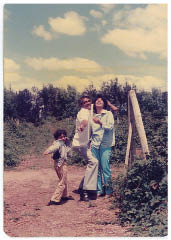
Imitation is the highest form of flattery, is it not? Papa’s Bollywood S-League Footloose attempt in New Zealand’s Strawberry Fields strikes a chord with Mom. I stumbled upon their love letters in the midst of my research for this piece, letters they used to read out to each other under a lamp post a stone’s throw away from SGH. It appears that I needn’t have looked far to discover the makings of a healthy relationship.
Before my teens, he would still use his hands to cover my eyes if a couple on the telly were even remotely amorous. The only chat we had about the birds and the bees – within the four walls of his study, was during my prep for an inter-class debate at St Pat’s on the pros and cons of sex education. He had found the topic relevant, but amusing. He tried to be of some help, but I think the subject matter had got the better of us. To the contrary, any screening of The Beatles Anthology would be met by the remark that it was “his time”. This time, I would look somewhat insulted. Likewise, my juvenile interest in crime came separately, from reading Alfred Hitchcock’s The Three Investigators, a book series for kids penned by Robert Arthur and several other talents.
He must have had some idea that time was running out. He was increasingly seeing death as a calling – “a good way to go”. On my twenty-second birthday, just before reading law at the University of Melbourne, he wrote the following on the first page of Sons: Quotations selected by Helen Exley: “We love U – and we protect U: someday – soon enough – U are on your own – AND We’ll be watching over you – still. We Luv U – as always, Papa + Mummy”.
Soon after watching him go, I took a small journey to piece together the jigsaw puzzle of his life. Perhaps fate pushed me to it. The day after his funeral, we heard one of his favourite songs, McCartney’s Leaving on a Jet Plane, just next door. Later that day, my brother-in-law Mark got into Papa’s car to rev it up. As the car started, the same song I had sung and played at the funeral, Clapton’s Tears in Heaven, came on the radio. “It’s a nice coincidence, don’t you think? Even if you don’t believe in magic”, Mark said. I agreed, but remained doubtful. Lightning doesn’t strike the same place twice – or does it?
Can we say with confidence that we take nothing with us when we die? If memories of the dead still live in us, can memories of the living no longer live in the souls who leave us? All I’m saying is the answer may not be so simple.
After Papa’s passing, waves of accolades washed over us. But he had already left by then. A search revealed his file containing all our e-mail correspondence and other papers, including the lyrics of Harry Chapin’s Cat’s in the Cradle. At this point, I had started to miss his exhortations to “Come, see TV”.
John Lee, a close friend from University days and a former Magistrate and DPP, told me the story of a man of universal religions. His office in Colombo Court, followed by the Adelphi, was a shrine of sorts for many a defendant or plaintiff: the Cross, Hindu deities, the Guan Yin statue, and the text of the Quran. I understand that John swotted with him at Law School. Their search for the meaning of life set them on the path of several adventures – memories my father treasured. I think Papa eventually settled for Lopez’s Arctic Dreams: “At times, there is simply no answer to some of the great pressing questions. You continue to live them out, making your life a worthy expression of leaning into the light”.6
Former Singapore 100 metre record-holder (10.3 seconds) C. Kunalan, a close friend and confidante at Teacher’s Training College, stated: “Time was nothing to Pala. He’d work so madly, the next day he would be up early, put on his tie and go to court looking for more work – free of charge to the poor”.7 “He was a gem of a guy”, said Rashid Abdul Ghani, University pal and partner in Khattar Wong & Partners.8
“He turned every stone”, said prominent criminal lawyer Peter Fernando, during my two week stint at his good office. R. Thrumurgan, another talented criminal lawyer I have had the pleasure of working under, revealed “He didn’t suffer fools gladly”. Malathi Das, another former employee of Palakrishnan & Partners, opined, “He’s funniest when he doesn’t try too hard”. I recall her with us as I carried spare light bulbs from his office into the lift one day. “Trying to be bright”, he remarked, as he took a puff from his pipe, giving Mal the giggles. It still took a while for me to get it. He has a good sense of humour. Avery Chong referred to him as “Selfless friend, honourable opponent”. His brother, Adrian Chong, partner in Low, Yeap Toh & Goon, said: “If Pala were still around he would probably say it’s really about whether you get the job done or not. Pala got the job done”.
I know that he certainly wanted to walk the talk and make a difference.9 In his final message as President of the Law Society of Singapore, he spoke of the 12th player on the soccer pitch who stands on the sidelines and does not do much aside from criticise.10
I am grateful to our current President of the Law Society, Lok Vi Ming, SC, for his acknowledgement of Papa’s contribution, with the help of many others, to securing the Law Society’s premises. These included renowned playwright and fellow Gan Eng Seng alumnus Jeremiah Choy. I thank the many members of the Class of ‘72 (“Just Class”) and close contemporaries – including, inter alia, Archie Ong, Conrad Raj, Navtej Singh, Rashid, Noor Quek, A. Alagirisamy, Mohan Das Naidu, T. U. Naidu, Mano Sabnani, and Chandra Mohan for enriching my late father’s life in their common pursuit of just causes.
In closing, I can say that, at least as a father, he was judicious. Even in childhood, he had received the “Dad of the Year award”, conferred on Father’s Day, 19 June 1988. I don’t know how official these figures are, but he earned it. This Father’s Day, I can confirm that award in the very Law Gazette he started, with the assistance of Mal, Ah Leng, Sharmaine Lau, Shirin Kamsir and the many volunteers whose contributions he deeply appreciates. I think that, as a father and friend, he was there when we needed him most. That, I suppose, is really all that matters.
For those of you who still remember, thank you. Special thanks to Cheryl Chan, Alice and Nelly for ensuring that he had his meals. I leave behind an anecdote my late father cited on the future of the legal profession, which he calls “The Jurist”:
There was once a very ancient and learned person who was known as the Jurist, and who could answer any question. One day, some children captured a bird and decided they would test the Jurist. They said, “Let us take this bird to the Jurist and ask whether it is alive or dead: if the Jurist says that the bird is dead, we will let it loose; if the Jurist answers that it is alive, we will crush it.” So they went to the Jurist and asked: “That which we hold in our hands, is it alive or dead?”
The Jurist looked at them and smiled, and then replied, “It is in your hands”.11
Papa, rest assured that you have done more than enough for us. I have taken the right side of the couch. I guess you can nudge me again if you want me out of the way. As for the study, you don’t have to worry. It will be left as it is. It should continue to be surrounded by your sea of books.
Luv U 2, as always,
Sanjayboy-“San”
►Sanjay Pala Krishnan
The Law Society of Singapore
Notes
1 Lex Fullarton, “Singapore pin their faith in a goalkeeping law student: Singapore are pinning their hopes on an Inter-Varsity hockey gold medal on Pala Krishnan, a wiry law student”, South China Morning Post (31 July 1968).
2 Jeffrey Low, “Pala, the Tireless Visionary”, The Straits Times (25 June 2003). Mr Low was invited to be part of the Goal 2010 Committee, particularly for his insightful observations and critique. The Goal 2010 vision has since been replaced with a roadmap, introduced by a friend, Associate Professor Ho Peng Kee – Stanley Ho, “Goal 2010 no more”, Today (18 June 2004).
3 Ibid; K. C. Vijayan and Yvonne Koh, “Singapore lawyer dies in Melbourne”, The Straits Times (25 June 2003); Kim-Kyna Tan and Jose Raymond, “Servant of law and football”, Today (25 June 2003); S Gulam, “Singapore loses a legal brain and top soccer official”, Today (24 June 2003); Navtej Singh, “Remembering Pala”, Today (9 July 2003); Godfrey Robert, “A lawyer’s lawyer and friend to many”, Streats (25 June 2003).
4 Ibid.
5 Kim-Kyna Tan and Jose Raymond (note 3 above): “In his more than 20 years in the legal profession, Pala defended robbers, murderers, drug traffickers and the like in criminal cases, and took on a range of civil matters, including negligence and defamation suits, often at slashed rates or pro bono”. Navtej Singh, “Remembering Pala” (note 3 above): Mr Singh spoke of Dr Lim Ee Koon’s likening Pala to “a modern day Robin Hood in legal robes” after he had volunteered to foot the bill for a terminally ill patient on death row who sought clemency and was pardoned.
6 Barry Lopez, Arctic Dreams (1986); R. Pala Krishnan, “Reach Out and Reform: Seismic Changes Ahead”, Law Gazette (January 2001).
7 Low, (note 2 above).
8 “Pala mourned and revered by many”, Today (30 June 2003).
9 Althea Lim, “A great honour, a big responsibility”, The Straits Times (7 January 2001); “A sign to those from ‘humble and small’ practices”, The Straits Times (7 January 2001).
10 R. Pala Krishnan, “Leadership – Not a Spectator’s Sport”, Law Gazette (December 2002).
11 R. Pala Krishnan, “The Law Firm of the 21st Century – The Singapore Synergy” (Law Gazette, May 2000).