Last month in this column, we featured three dedicated prolific Criminal Legal Aid Scheme (“CLAS”) volunteers. Here we introduce you to three more similarly astounding individuals.
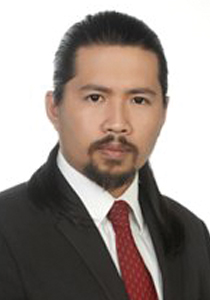
In the last year and a half, Josephus has completed about 24 CLAS cases. He estimates that he has taken on about 120 pro bono cases since he was called to the Bar. It was no surprise then when Josephus was appointed as the Law Society’s Pro Bono Ambassador of the Year in 2013, making him the fifth such ambassador and the youngest. Josephus is a specialist criminal lawyer who takes only criminal cases. His choice of pro bono work reflects his area of expertise. He takes pro bono criminal cases under CLAS, Ad Hoc Pro Bono Referral Scheme (“AHPBS”), Voluntary Counsel of the Community Courts (“VC3”) and the Legal Assistance Scheme for Capital Offences (“LASCO”). Why? “For kicks!” says Josephus glibly. Sometimes it’s hard to know when he is joking and when he is serious. Given the sheer volume of pro bono work Josephus has done, one might be inclined to believe that only pure enjoyment of the work could explain it. Josephus elaborates that he is actually motivated by the aspiration that everyone should be given a fair chance to explain themselves, even if they are poor. A necessary corollary to the constitutional guarantee of equality before the law is equal access to justice and there can be no equal access to justice without equal access to legal representation.
The legal profession is an exclusive one and with it comes knowledge and expertise that is similarly exclusive. Therefore, lawyers are in a truly unique position to provide assistance to those in legal difficulty. Because of this, Josephus feels a strong compulsion to help because he knows there are very few who can. He says this is the same logic that compels a doctor to stop and help an injured person on the street. “How can you pass by a poor person in trouble who cannot speak up for himself, and not help him when you know you can?” Josephus believes most people are inherently inclined to help other less fortunate human beings when they can, that this is a natural human instinct and that obeying that instinct allows us to be more human.
There are detractors who criticise defence counsel for “helping criminals”. Josephus cautions against judging people without knowing all the facts and reminds that there have been many cases throughout history where the public has already decided that an accused person is guilty based on hearsay, only for the accused to later be exonerated of all wrongdoing. Even for the guilty, Josephus still believes that the role of defence counsel in ensuring that he receives a suitable and proportionate punishment is crucial. This responsibility cannot be borne solely by the prosecution as every system needs an external check to ensure that it is consistent, reliable and accurate. This is particularly so in an adversarial system like ours where we believe that truth is most effectively arrived at by vigorous arguments for two opposing views.
That’s all well and good but how are lawyers expected to balance their paying bread and butter work with pro bono cases? Josephus’ ideal scenario is to spend half of one’s time on paid work and half on pro bono work. While he accepts this may not be acceptable to many firms, from an individual lawyer’s perspective, one can still make a living with a ratio like this and help a lot of people. This model will certainly not produce wealthy lawyers but nor will it result in impoverished lawyers. It boils down to whether a lawyer is prepared to simply get by comfortably with a frugal lifestyle or whether the accumulation of wealth is their primary consideration.
Josephus remarked that if every practising Singapore lawyer took two CLAS cases a year, the access to criminal justice deficit in Singapore could be eliminated overnight. Josephus is unconvinced by very successful lawyers who say they are too busy to take a pro bono case. Where there’s a will there’s a way. “In the hour it takes them to bring their Lamborghini for servicing, they could have done a criminal mention in the District Court!”
For the average associate at a law firm, Josephus recommends having a frank and open discussion with one’s supervisor at the interview stage about expectations in terms of time to be spent on pro bono work, to ensure that employer and employee are on the same page and that the associate does not unwittingly join a firm that is incompatible with his pro bono ambitions. Once hired in a compatible firm, the associate should try to strike the delicate balance between paid and pro bono work by working on his pro bono cases in his own time, after office hours, as much as possible. If this can be done most of the time, there is no reason why any firm should find this work objectionable.
For Josephus, there is no calling more important than defending someone’s life or liberty. For lawyers who may be considering whether to volunteer for CLAS, he urges them to “do it not because you must, do it not because you can, but do it because you’re human.”
Krishna R Sharma – Tan Lee and Partners
In the last year and a half, Sharma has completed about eight CLAS cases. He has always been in the habit of volunteering for community work and when he got called to the Bar, he was eager to find a way to volunteer that would make use of his legal skills. CLAS was that way. He finds CLAS work personally enriching because of the diverse range of people he gets to know through it – people with whom he might not otherwise have occasion to interact extensively. He also finds the trial experience he gains from it invaluable.
Through his interactions with his CLAS clients, he has developed a deeper appreciation for the resilience of the human spirit. He recalls the courage of one CLAS client, who was charged with causing hurt, and adamantly refused to plead guilty to a lower charge which would have resulted in a relatively short prison sentence and instead insisted on running the risk of claiming trial to the higher charge, on the principle that she could not plead guilty to a crime of which she was innocent. Although drawn to CLAS, and criminal practice generally, by the application of rules to fact scenarios and the systematic way in which each element of an offence is dealt with, experiences like these with CLAS clients remind him of the more fundamental basic calling that compelled him to enter practice – to maintain the integrity of the oath he took and to do the right thing even in the face of adversity. Reminders like these of why we became lawyers are much rarer occurrences in commercial practice.
Sharma also gets great personal satisfaction from the almost constant expressions of gratitude from the family members of his CLAS clients. He has observed that although these families are poor, they seem to have stronger family bonds than his paying clients do, as the families of his CLAS clients tend to come to Court and sit in the gallery for trials to support their family member whereas the families of his paying clients seldom do so. Sharma feels that it is a privilege to be able to explain to these families what they are seeing and how the criminal justice system works.
Balancing his paid work and pro bono work can be challenging but he does this by confining his pro bono work as much as possible to lunchtime and after office hours. Since some of his CLAS clients feel uncomfortable visiting his office in the CBD, he often tries to take instructions in Court when he goes for a Pre Trial Conference or over e-mail when possible. He tries to schedule his CLAS hearings in tandem with his paid hearings whenever possible to reduce the number of trips to Court he has to make. He does not take on a CLAS case unless he feels he has the capacity to handle it. However, he has found that the exposure that CLAS trial work has given him has made him a better lawyer and that his paid clients have benefited from this.
Sharma tends to take CLAS cases involving young offenders. He has also begun to develop a specialisation in sexual crimes involving young offenders after taking a number of such CLAS cases.
For lawyers who are thinking about taking a CLAS case but have yet to sign up as a volunteer, Sharma compares CLAS representation to swimming. “You can’t go for a swim until you dip your toe into the waters first!” In other words, there is no point thinking about it – you just have to start doing it. According to Sharma, a CLAS lawyer must have confidence to meet someone from a disadvantaged background, to believe in them and to be prepared to roll up their sleeves and meet the challenge of fighting for them. He urges lawyers to think back to the day they were sworn in and recollect whether they were thinking about corporate transactions or the defence of liberty when they recited the oath.
Amarick Gill – Trident Law Corporation
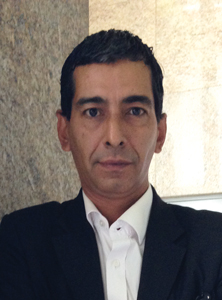
Amarick has completed about seven cases in the last year and a half. He is also an active volunteer and founding member of the VC3 pro bono scheme, which takes Community Court referrals at short notice. He is currently handling about 10 ongoing VC3 cases and five ongoing CLAS cases. Most of the lawyers in his firm are also active CLAS volunteers and he strongly encourages his associates to take CLAS cases and provides them with guidance and assistance. He estimates that his firm as a whole is currently handling about 25 VC3 cases and 10 CLAS cases.
Why does he do it? He feels that since he is in a position to help, why not? As his own boss, Amarick gets to make the rules and in his firm, every case is treated the same, whether it is paid or pro bono so his associates learn not to distinguish one from the other when they are working on them. Ultimately, Amarick feels that the exposure to criminal work that CLAS provides for his associates is beneficial to them as lawyers and, therefore, to the firm, despite the absence of any immediate pecuniary benefit. He feels that it is important to instil the right attitude towards pro bono work in them from early on. He laments the plight of associates in some large firms who have to try to do CLAS cases surreptitiously without letting their partner find out, for fear of the adverse impact it might have on their bonus, increment or promotion opportunities. These large firms lack the kind of pro bono culture to be found in Amarick’s firm. In the last year and a half, the big four law firms combined, who constitute about a quarter of the entire Bar, completed only about 35 CLAS cases, a mere drop in the ocean – indeed less than a tenth of the total number of CLAS cases completed in that period.
Amarick knows the plight of these associates all too well. He was once such an associate working in a commercial practice. A senior practitioner in another firm asked him if he would like to assist him with a LASCO matter. Amarick pleaded with his partner to allow him to assist with the case but he refused. His firm was not going to be seen doing that kind of work. Amarick had a promising future with the firm, an offer to pay for him to do a Master’s degree and to come back to the firm with partnership prospects. After some reflection Amarick tendered his resignation and went to assist the senior practitioner with his LASCO matter. He was prepared to make real personal sacrifices for the cause of access to justice. For associates in a similar position, if their directors refuse to allow them to do even a little pro bono work, he encourages them to put their principles first and leave. Amarick has no regrets. He feels great about the work he does now and enjoys criminal practice immensely. It is all the more satisfying when he gets to help someone who cannot afford to pay for legal representation and who would otherwise be lost. It clearly means a great deal to them and they have all been very grateful to him.
He recalls one such case where he represented a mother who was charged with stealing infant milk powder from a shop. After speaking to her, he discovered what the investigation officer apparently had not – that her children were much too old to drink this kind of milk, that she had suffered two miscarriages in the past year, that she was so deeply troubled by the mental trauma of these miscarriages that she heard voices of her stillborn infants crying for milk and that these aural hallucinations were what caused her to commit the offence. Subsequent psychiatric evaluation confirmed that this was the case. After presenting this evidence to the prosecution, they issued her with a discharge not amounting to an acquittal. She was sent for counselling where she received therapy to cope with the trauma she had endured. She has now recovered and is living a fulfilling crime-free life.
Cases like this, where there is some psychiatric issue involved, appeal to Amarick and he most frequently volunteers for this kind of case. Unsurprisingly, he has developed a strong specialisation in Community Court work over the years, which eventually led him to set up VC3 to provide pro bono assistance to accused persons being charged in the Community Courts at short notice.
Amarick is of the view that all it takes is for every single practising lawyer in Singapore to handle a single case a year. There are resources available to assist those practitioners who are not familiar with criminal work and to guide them accordingly. This would lead to adequate representation and in terms of numbers, there would be more than sufficient lawyers for all applicants. Amarick says, “Instead of asking yourself why you should take a CLAS case, ask instead why you should not do just one CLAS case in one year?”

► Eoin Ó Muimhneacháin
Pro Bono Services Office
The Law Society of Singapore